This is a picture of a semi-traditional Tongan home. It's probably about 12 feet wide by 6-7 feet deep. Most of the more traditional homes have only two rooms - parents' sleeping room and a common room. All the cooking is done outdoors, on an open fire, and bathroom needs are met by hand-dug latrines and buckets of water. The shutters, closed against the rain in this picture, can be propped open to allow for ventilation.
 This house is more indicative of how most people live in Tonga: a simple, concrete structure with four or five rooms (common room, parent bedrooms, boy's bedroom and girls' bedroom, perhaps a room for extended family). The corrugated metal fencing around the yard is to keep the pigs out of the yard, so it's called a pig fence. This house even has a catchwater system, to store rainwater for household use in the big cement cistern to the right. The smaller green cistern to the left holds treated water, delivered to the house, for drinking and cooking.

This is a typical scene on the road. You can see whole truckloads of students being delivered to the school here each morning - people find a place to sit, on the corners of the truck bed walls, or standing and holding on to the frame behind the cab window, or just lying down in the bed of the truck. Don't panic, though, most of the time they're holding on very well, and the trucks rarely go more than 30 mph!

This is John (in Tongan, Sione = say See-OH-nay), one of our security guards here at Liahona. Our school colors are green and white, so someone found these shirts and bought them for the security guards. I have to smile when I read the pocket tabs, though: Homeland Security. Without going into detail, let me assure you that security at Liahona is much more relaxed than any security system I've ever seen anywhere else. But we don't need a lot, either.
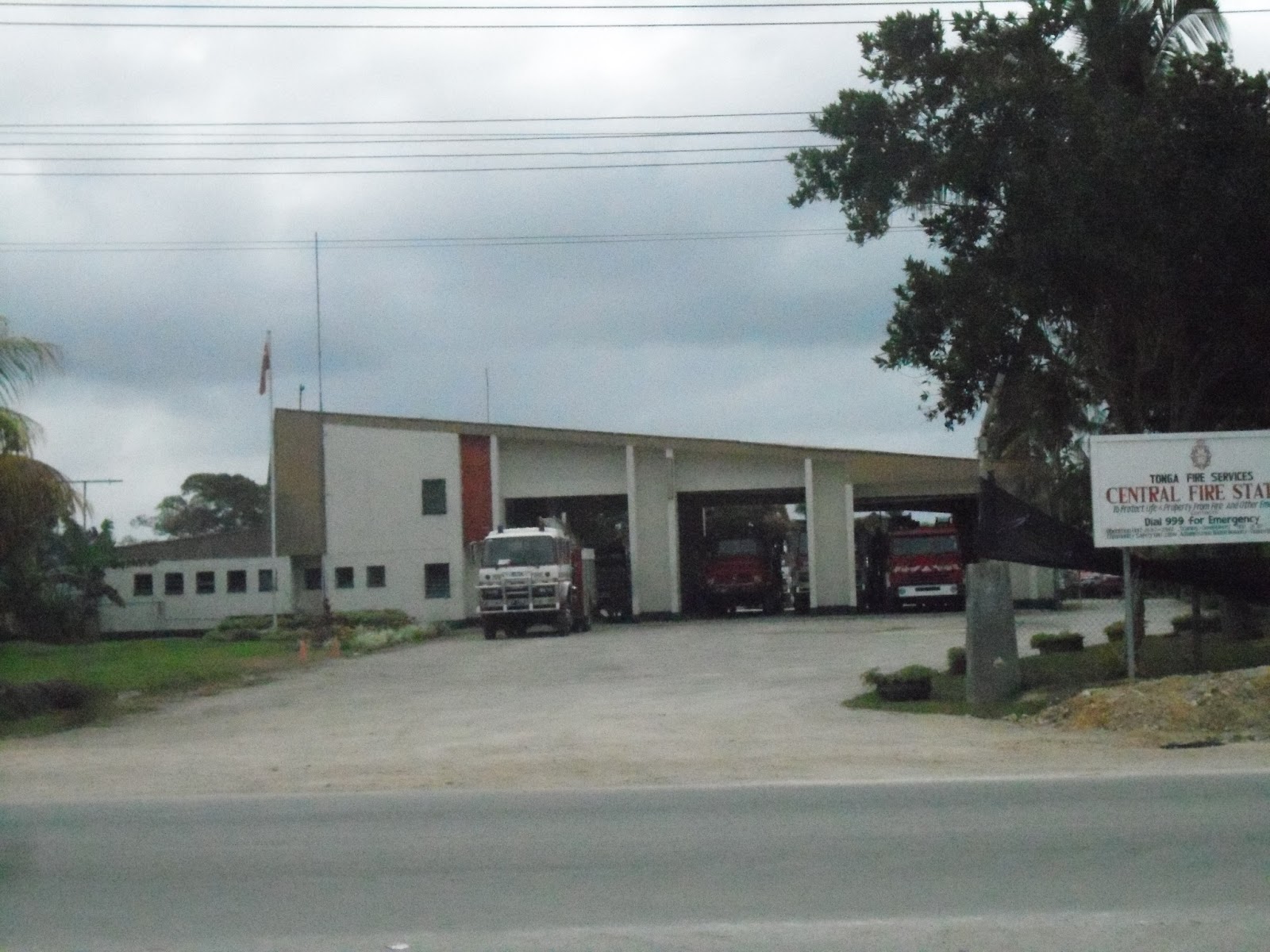
This is the fire station here. And by "the fire station", I mean THE fire station. There's only one in Tonga. They stay busy! They have a couple of small tank trucks and a pumper. Does anyone know a multi-millionaire who would be willing to donate a couple million dollars to build and equip a second station on an island of 70,000 people?

The next picture is just so you know we aren't deadly serious all the time. This was a mock trial at our recent principals' conference - English powdered wigs and all - charging principals with (shock and horror) making improvements to their educational programs!!! Turns out they were all guilty, and each was sentenced to eating a 24-ounce chocolate bar at one sitting!

This last picture shows the dais built for the King of Tonga when he came to hand out diplomas at graduation. This temporary structure was built out from the stage in the school gym/auditorium, and then covered in traditionally woven and painted mats. The different weaves, patterns and styles of decorating reflect the different clans on this and some of the other islands in Tonga. But the thing that amazed me most about the whole graduation ceremony was that students climbed up the steps at the right, received their diploma from the king, and then BACKED DOWN the steps again, because it is disrespectful to turn your back on the king!
Life in Tonga is simple, unstressful, and slow. And I am learning to appreciate that.