Showing posts with label island. Show all posts

Thursday, February 14, 2013

TO KAVA OR NOT TO KAVA


Kava trees as they grow.


The Tongan farmer looked at the visiting Paalangi.  “This is kava.  Kava is a royal crop, Brother.  I have more than 200 acres of it growing on my plantation.  This is how I shall provide an education for my children and for my grandchildren, from the sale of kava. We make juice from the roots.  Will you honor me by trying some?”


Squeezing the juice from kava roots.


The Paalangi looked long at the Tongan.  “Brother Vai, I have never seen kava before.  But I have just had a prompting from the Holy Ghost that kava is not good for the body. I shall not drink any today.  Still, I thank you for your invitation, and your good will.”

Dried kava roots

 The Paalangi left, and Brother Vai sat down to think.  Then he stood, and thought some more.  And then he walked, and thought some more.  Much, much later that night, he went to bed.

 The next morning, Brother Vai called his plantation workers together.  "We will uproot every kava tree on this plantation,” he said, stunning his workers.  “I will not grow kava any more.”

The workers would not confront their employer, but later they complained among themselves.  "He can't be serious!" said one.  "The other plantation owners will say he's gone mad," said another.  "What is he thinking?  He will have no money, and we will have no jobs!" protested a third.  Still, they obeyed their employer.  He was firm; every kava tree had to go.  


Many weeks later, the last of the kava trees was removed from the ground.  The workers watched in amazement as every tree was chopped up for firewood, and the valuable root systems burned.  Now that the job was finished, the plantation owner explained himself to his staff.

“I trust this Paalangi who came to our plantation.  I know in my heart he is a man of God. I know that he is inspired of God, and I trust his judgment based upon that inspiration.  He was the one who told me that kava is not good for the body.  I will not grow anything that is harmful to anyone’s body.  I will apply in my life the principles that I know are true; and one of those principles is to never harm another person.”

The workers now understood why Brother Vai had chosen to uproot his crops.  But how would he pay them?  How would they manage a plantation with no crops?
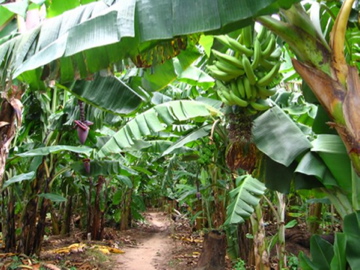
A banana grove.
Brother Vai started over.  He had banana trees, and bananas would always sell.  They would plant more banana trees.  Little by little, more crops were added: mangoes, melons, pineapples, root crops – and sooner than any of the workers had expected, the plantation was filled with beneficial vegetables and fruits.  And Brother Vai never let any workers go – they managed together.  The plantation thrived as never before; the weather seemed to support every planting, every harvest, and the workers came to understand the value of applying their faith in both word and deed.


This is what kava drink looks like.  It used to be used only
in ceremonies,but now is popularly used as a pastime.

I was told this story by the grandson of Brother Vai, whose entire family uses this story to teach each other the value of trusting in our leaders.  I don’t know who the Paalangi in the story was; it doesn’t matter.   What matters is that Brother Vai perceived the inspiration of a leader, and trusted enough in that inspiration to take the drastic step of destroying his own crops and then replacing them, without knowing for himself the reason.  (It is now common knowledge that kava is a mild hallucinogenic, is addictive, and can cause severe liver damage.)  Brother Vai , his children and grandchildren are strong, contributing members of the Church here in Tonga, and provide leadership in many wards and branches.  It is our pleasure to know and work with a few members of this family.  

Sunday, August 12, 2012

LAND OF WONDERS


Seems a man from Texas came to Tonga some years back, curious to compare farming techniques.  After spending a day on a Tongan “plantation”, the word for farm here, the Texan wanted to impress the Tongan with the difference in scale.  “This has been a wonderful experience,” said the Texan.  “But I want you to understand, it takes me an entire day to drive the perimeter of my ranch.”   The Tongan raised his eyebrows twice in acknowledgement.  “Oh yes,” said the Tongan, “I had a car like that once.”  (No offense intended, my Texan friends!)

Tonga is tiny, but it has its share of wonders.  And some of them are absolutely jaw-dropping. This tiny island nation, spread out over miles and miles of ocean, has many delights for the eyes, ears, noses, taste buds and fingers for those who will take the time to notice.

Let me remind you that if you added up all land of the 177 islands and islets that make up Tonga, you’d add up to a little more than four Districts of Columbia.  I live on the “big” island of Tongatapu, all 100 square miles of it – the size of DC and Arlington, Virginia put together. I have not seen all that this island has to offer, by any means.  But I have been awed by what I have seen.

To the east of Tonga, under the water, lies the Tonga trench, the second deepest point in the Pacific.  The sea floor here is the northeast juncture of the Australian and Pacific tectonic plates, and the Pacific plate is being driven beneath the Australian plate in a process called subduction.  Because of this process, there is frequent seismic activity in the area – we just had a 5.9 earthquake last week.  There are even underwater volcanoes being swallowed in this process.  I have been fascinated with the research going on that is documenting this dramatic event.  Here's a link to a news report from last November:


And we can visit the blowholes just minutes from our apartment and office, and be treated to a marvelous display each morning and evening.  From July to October, humpback whales frequent these waters, calving, nursing and tending their young.  We can see the whale spouts and flukes as these magnificent creatures surface, and now and then we are treated to a breach, when the whales jump out of the water, seemingly for the simple joy of doing it.  Mothers spend between 3 and 4 months here helping their babies grow, before they return to the Antarctic waters rich in krill, their main food supply.  The baby whales nurse and grow tremendously during these few months, but the mothers do not even feed.  Wow.  My biggest frustration is that the whales are always a few seconds ahead of my camera!


Closeup of a blossom cluster

My favorite perfume on the islands is the frangipani tree.  Even when this tree drops its leaves for the dormant season (I can hardly call it winter here), it keeps blooming, and the  palm-sized blossoms, either pink or yellow with white, have a gentle aroma that just makes me smile.
This tree is about 10 feet high, and loaded with pink blossoms.


This island of Tongatapu is proof to me that God has a sense of humor.  Even though this island is only 30 miles end to end, there are five different kinds of potato that grow here.  And one of them grows on a tree!  From “millimeter potatoes” that I grew up calling new potatoes to purple sweet potatoes to breadfruit (youth basketball-sized globes that indeed grow on trees) to the two-foot long “ufi” (OOO-fee), like in the picture.  Tongans can always get their starch, to go with their “lu”, corned beef wrapped in a thick, spinach-like leaf – a favorite at most family gatherings. Garden vegetables here are quite pricey, but you can always feed your family a kind of potato, and fill those empty stomachs. 


This is a screen capture of a Google Earth image.  
The Pigeon’s Doorway, or Hufangalupe in Tongan, is what happens when water, wind and erosion combine on the face of a cliff.  What looks like a sinkhole from the air is actually a chasm carved by the waves, with a natural bridge of rock and soil over a huge opening where the ocean rushes in.  

Low tide under the natural bridge formed by
 the rocks that  the waves can't reach.
The limestone cliffs are over 100 feet tall at the ocean’s edge, and even on the calmest day the waves crash with a humbling energy against the rocks. The volume is impressive; you have to walk away from the cliffs’ edge a good ways before you can talk to each other. 


Free-range pigs - a common sight here!
And everywhere, everywhere, are the birds, the fruit bats called flying foxes, the crickets that chirp every night year round, the varieties of floating jewels called dragonflies, the timid dogs and cats that scavenge for food, the free-roaming sows and piglets filing across the street – Tonga is a wondrous experience for me.  Can you blame me for wanting to stay forever?

Monday, June 11, 2012

CANDLES WILL SUFFICE


So the electricity in the tiny Tongan home was turned off.  Husband Taniele and his wife Mele, who lived on one of the outer islands, were undeterred.  Neighbors gossiped about them, and even confronted them:  “Aren’t you ashamed to bring your children back here for the summer?  You haven’t managed your finances properly.  And now your five children will come back to a home with no electricity.  They will have to use candles to read, and you must now cook outdoors, over an open fire!  You have not been wise parents!"


S

The neighbors’ words and looks had the same kind of impact as beating a coconut with a palm leaf; Taniele and Mele smiled in return.  “We do not care about the electrical power,” said Taniele.  “I have worked hard to catch the crabs near the cliffs of our island, and I have saved enough money to pay for all five of our children to return home for the summer, after living at school all year.  All five of our children will have money to pay for their ferry ride when school ends this month.  If I must sacrifice our electrical power, is that not worth it?”


“We may not have electrical power, but we will have our children with us for a few months,” continued Mele.  “I will gladly cook for them over an open fire.  And they will help me, and they will help their father with his fishing.”


Taniele searched the faces of his neighbors.  “Electrical power is nice to have, but it is not a necessity in my life,” he said.  “When my children arrive home, I will light a fire in the yard.  I will gather them around the fire.  And I will teach them again how they should light the world around them, using the light of their own knowledge.  I will teach them to share their light, to lift those around them, to provide clearer understanding for those who are confused, to provide confirmation for those who doubt, to provide a pathway for those who are lost, to provide support for those who have fallen, to provide illumination for those who are searching. And I will remind them that their first duty is to provide light for each other – the older children for the younger, and sometimes the younger children for all of us.


“Then, when I have taught them, I will give each of my children a candle to take to their beds. They will certainly tell me their candles offer only a poor light, but I will remind them that it only takes a few candles to light an entire room.  Together, our five candles will light our way to our home.  And once inside the room, we will kneel in prayer, to offer thanks for their safe return to our home.  And the candles will remind us of the source of all light and knowledge, our Heavenly Father.  And they will remind us of our Savior Jesus Christ, who has lighted our way so that we may return to our Father.  And we will love the light, and seek for it together, so that we may live in the light together.  And when my children are grown, their light will be stronger than mere candles – they will be bright lights to each other, to their friends, to their husbands and wives, because they will carry within themselves the light of the Spirit of God.”


Taniele and his wife Mele are typical of the faithful Saints in Tonga, who realize that using the power within ourselves to benefit others is eternally important, while other types of power are just earthly conveniences.  Their perspective, their faith, and their humility has affected me deeply.  I hope this story has a deep effect on you, too.  Remember what is truly important.  


Monday, May 21, 2012

ENCHANTED? PERHAPS!


I have written before about the animals of Tonga, but until recently I didn’t have my own pictures of the bird Tongans call “eki-aki” – the white tern.  (I still only have a couple - thank you Google Images for the rest.) 


I remember reading about these birds years ago in National Geographic.  I had been here in Tonga almost two months before I found out that there were white terns on this island.  Then it took me four more months to see some.  It was an experience I have wanted for years, and it did not disappoint.


These birds, with their all-white feathers, dark blue beaks and legs, also have dark blue circles around their eyes, making their eyes look even larger than they are.  This adds to their allure, as far as I’m concerned.  About a dozen were resting on some tree branches when we got out to look for some other creatures, and the surprise of their flight and the seeming translucence of their wings was delightful.  


White terns are small – smaller than pigeons.  But they fly miles off the coast of islands in their search for food – mostly small herring-style fish.  The birds notice waters being disturbed by whales or other predators chasing the small fish to the surface, and the birds dive and catch fish in their beaks, sometimes lining up two or three in a row.


White terns are talented little birds.  They are one of the few birds who can hover.  They are highly curious, and have been known to follow people who walk near their habitats, hovering just out of reach.  This behavior has contributed to these terns being called “fairy terns” in Hawaii and some of the other islands of the Pacific.  

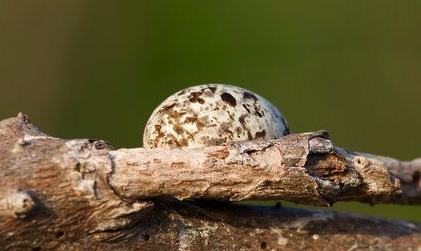
One of the oddest behaviors of small birds is the way that adult terns lay eggs.  They build no nest.  A single egg is carefully balanced on a ledge, or in the crook of a tree, out of the reach of ground predators.  When the egg hatches, the chick’s oversized feet help it grasp the branch and literally hang on for dear life. Both parents feed the chick. When the chick is two months old, it fledges, and the parents teach it to hunt for fish, and two weeks later the chick is on its own, flying and fishing for itself and maturing to start its own family. 


Fairy or not, these magical birds have added to my spell of enchantment here in Tonga.   They have made me appreciate the wonders of creation, and helped me value more the tenacity of life on this little fishhook island.  And my wishing stars are now closer, and feathered.