|
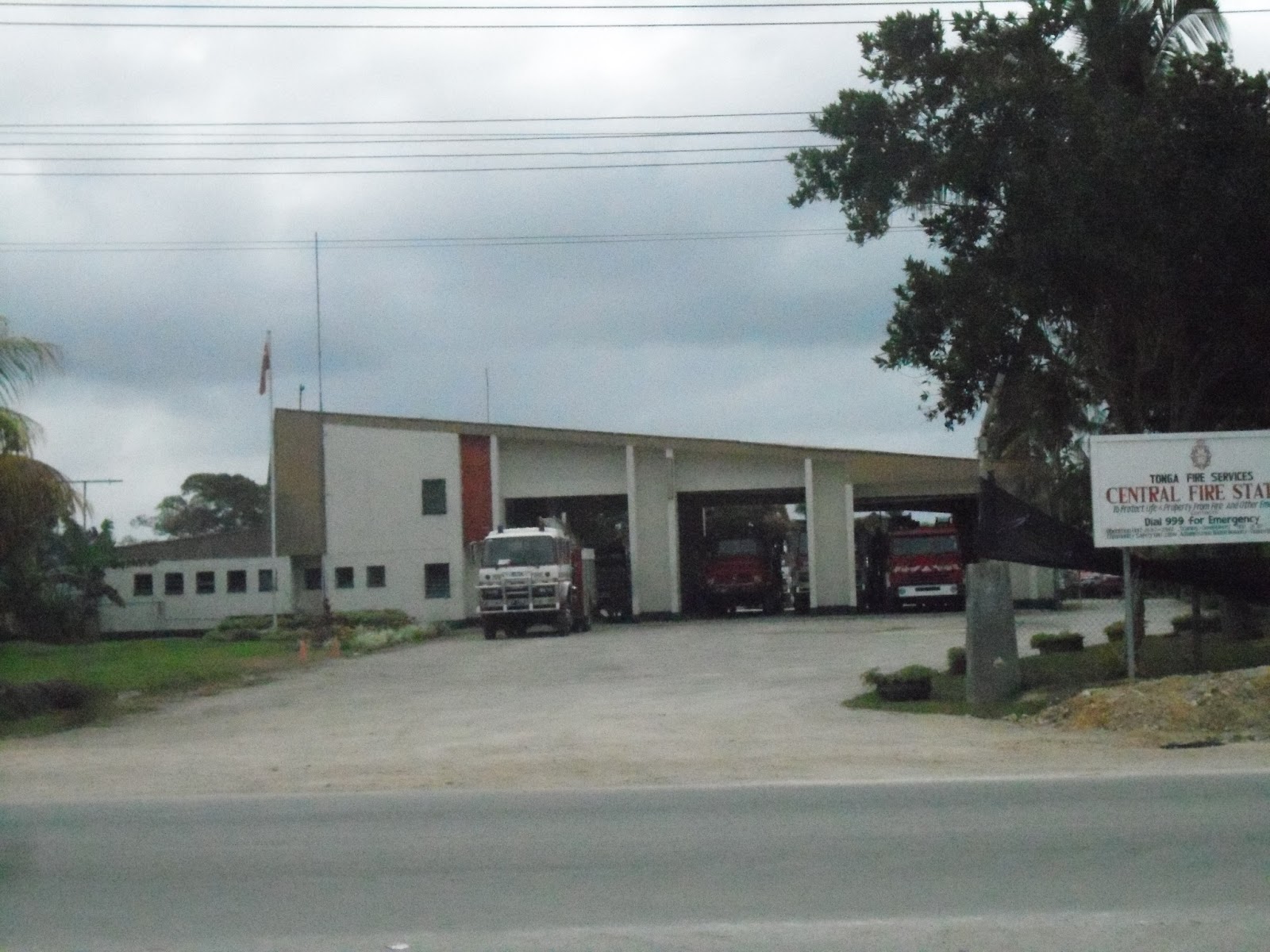
This is what the highway looked like all the way from
the airport to the palace last year, when the former
king's body was returned to Tonga.
|
The culture in Tonga is all about respecting those of
superior rank, whether that means parents, the royal family, government
leaders, church leaders, or even students who have been given particular
titles. Commoners defer to the
nobility here, and everyone defers to the royal family. Children are expected to show respect
for all adults – and like the Navajo tribe of the American Southwest, that
includes NOT making eye contact when being spoken to directly. So when the Protestant minister calls
upon a family, they all sit in their home never looking at the minister. Coming from my background of non-verbal
and verbal communication levels, that habit has been hard for me to accept. Fortunately, it’s okay for Palangis to
look at people – even the king – so I haven’t been thrown in jail or anything
for looking at someone at the wrong time!
Okay, a little more explanation, then the story. Students called “Prefects” here help
out like student government officers in the U.S., but there are also offices of
Head Boy, Head Girl, and Student Body President. And these officers are shown the same kind of respect by
other students that adult leaders are shown by the general population – unless
their teachers decide to change the culture.
 |
The Liahona flag and uniform - two white stripes on a
field of green. The two stripes remind students to learn
by study and also by faith.
|
That is exactly what is happening here at Liahona. In their Seminary (religion) classes, teachers
have been helping students model themselves after Jesus Christ, who was a
leader by being a servant. In fact,
the teachers have named the leadership model the Servant Leader. Time after time, students have been
taught about how Jesus Christ healed the lame and blind, patiently taught and
explained principles of power, and led by example in serving others. Here is a story about how one student
put those stories into practice.
 |
| Most student gatherings in Tonga look like this, with leaders and speakers on a raised stand in a gymnasium, and students on plastic chairs. Multipurpose areas are the norm here. |
Malakai (Malachi) was the student body president at Liahona,
and he, along with several other student
government officers, attended a
leadership conference for all the high schools on the main island of
Tongatapu. One of the prefects
from another (Protestant) school invited Malakai to eat lunch with his student body
presidency, so Malakai took with him the Head Boy and one of the male
prefects. Instead of sitting down
first, Malakai got the box lunches for his two assistants, opened them and
handed each of them a fork and a napkin.
He happened to look over at the two assistants across the table – the
ones from the other high school – and saw the confusion on their faces, as they
brought their president his lunch, fork and napkin. During the lunch, one of them reached with a napkin to brush
some food off their president’s chin.
Malakai smiled, took his napkin, and reached over to one of his
assistants to brush his chin, again noting the confused expressions on all
three faces on the other side of the table. When they finished eating, one of the assistants on the
other side of the table collected the empty boxes and forks, napkins, and soda
cans, and took everything to the trash, while his president remained
seated. But it was Malakai who stood
up, collected everything from his own side of the table, and put it in the
trash.
 |
| Some of the food was prepared by other students. |
Malakai smiled.
This was his opportunity.
“Do you remember how the Lord Jesus Christ taught us to lead?” he
asked. “Do you remember how he led
others?” The other boys,
well-schooled in the New Testament, recited examples of Jesus teaching quietly,
healing people and doing good to others. Then Malakai taught them: “Jesus was a leader by
example. When he washed his
disciples’ feet, he was teaching them to serve. When he healed the sick, he was showing us how to serve. When he answered the same questions
over and over without becoming impatient, he was showing us how to serve. I
want to be a Servant Leader like Jesus Christ, so I try to follow his example
of showing respect to all of God’s children.”
The other boys had no reply.
The Church schools here in the Pacific have been challenged
to be the agents of change in their cultures. This story, at the very least, illustrates one moment of
change.