Showing posts with label white tern. Show all posts

Monday, May 21, 2012

ENCHANTED? PERHAPS!


I have written before about the animals of Tonga, but until recently I didn’t have my own pictures of the bird Tongans call “eki-aki” – the white tern.  (I still only have a couple - thank you Google Images for the rest.) 


I remember reading about these birds years ago in National Geographic.  I had been here in Tonga almost two months before I found out that there were white terns on this island.  Then it took me four more months to see some.  It was an experience I have wanted for years, and it did not disappoint.


These birds, with their all-white feathers, dark blue beaks and legs, also have dark blue circles around their eyes, making their eyes look even larger than they are.  This adds to their allure, as far as I’m concerned.  About a dozen were resting on some tree branches when we got out to look for some other creatures, and the surprise of their flight and the seeming translucence of their wings was delightful.  


White terns are small – smaller than pigeons.  But they fly miles off the coast of islands in their search for food – mostly small herring-style fish.  The birds notice waters being disturbed by whales or other predators chasing the small fish to the surface, and the birds dive and catch fish in their beaks, sometimes lining up two or three in a row.


White terns are talented little birds.  They are one of the few birds who can hover.  They are highly curious, and have been known to follow people who walk near their habitats, hovering just out of reach.  This behavior has contributed to these terns being called “fairy terns” in Hawaii and some of the other islands of the Pacific.  
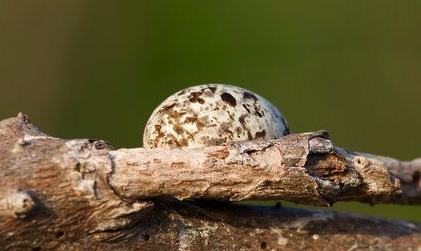
One of the oddest behaviors of small birds is the way that adult terns lay eggs.  They build no nest.  A single egg is carefully balanced on a ledge, or in the crook of a tree, out of the reach of ground predators.  When the egg hatches, the chick’s oversized feet help it grasp the branch and literally hang on for dear life. Both parents feed the chick. When the chick is two months old, it fledges, and the parents teach it to hunt for fish, and two weeks later the chick is on its own, flying and fishing for itself and maturing to start its own family. 


Fairy or not, these magical birds have added to my spell of enchantment here in Tonga.   They have made me appreciate the wonders of creation, and helped me value more the tenacity of life on this little fishhook island.  And my wishing stars are now closer, and feathered.  

Wednesday, April 25, 2012

An Eagle Scout in Tonga


This happened a few weeks ago, but I haven’t had a chance to write it!  We had a wonderful visit from Taylor, a Boy Scout who made Tonga his Eagle Project.  His grandfather accompanied him, and we had a week together, showing off Tonga and marveling at the scope of the Eagle Project of this remarkable Scout.
Taylor and his grandfather Van, in the craft section of the city's indoor market.
But first let me tell you about Taylor’s grandfather, Van Johnson (yeah, like the actor – he didn’t have trouble getting restaurant reservations, back in the day!).   Van has had connections with Tonga for years.  He is one of two Palangi (pah-lang-ee) that I know of who have been given a Tongan name.  Several years back, he arranged for half a million dollars’ worth of medical supplies to be sent to Tonga.  He came here and spent a week, and at the end of the week was notified that a ceremony was to be held in his honor.  He went and enjoyed the dinner, but then was pulled into a circle of village chiefs and informed that henceforth, he would be known as “Shooting Star”, because his presence was short but his influence would be longlasting.  And it has.  


So when Taylor asked his grandfather for ideas about an eagle project, Van thought of the “outer islands” where even fewer medical supplies exist.  He and Taylor got together with some medical supply companies, and some charitable foundations, and gathered a quarter million dollars’ worth of supplies.  Taylor’s fellow Boy Scouts, and the Young Women (teenaged girls) of his ward/congregation spent a day packing all the supplies in a warehouse, and filled a Conex container to be shipped to Tonga.  


When the arrival date was close, Van and Taylor flew to Tonga.  They stayed here on the Liahona campus, and of course the senior missionaries found them.  We took them to the beach and went snorkeling with them.  We took them for a picnic lunch.  Then we started showing off the little island.


This one is actually on every tourist map of Tonga.  Every coconut palm I have ever seen has had a single “head”, but this one has two (and as we all know, two heads are better than one!) – so we made sure we all got pictures of it.  You can’t tell from this picture, but the tree actually has a third head, a small one.  So who knows what the future will bring?  In 20 years, this may be the “octopus coconut palm tree!”  


Then we took them to see the flying foxes,the ones I wrote about in my “Wild Kingdom” entry.  We watched them launch from their trees and return for about an hour, but we got a bonus.  We saw about a dozen ekiaki (eh-kee-ah-kee), white terns, known in Hawaii as fairy terns.  These are fishing birds that do not build nests.  They simply lay an egg in the crook of a tree branch, or even on the ground, and when the chick hatches, its overgrown feet enable it to grab hold of a branch and stay safe, even when it sleeps, for the first two months of its life, until it is ready to fly.  Because these birds have all-white feathers, they edges of their wings look translucent when they fly, and because they can hover, they have a reputation for being magical.  Whatever – they’re gorgeous.  
Can't take credit for this one - thank you Google images.  But you see what a wonderful fantasy-like creature the white tern is - no wonder people think they're magical!


Taylor and Van traveled all over the island on their own, too, and gave me a couple of pictures.  Not far from Liahona is a church farm, where cattle are raised.  Frequently, the bulls are tied up across the street from the cows, and the day that Taylor and Van drove the road, sure enough, here was a bull tied to a tree.  So Taylor, teenager that he is, had to get out of the car and tease the bull, removing his own red shirt and playing toreador.  Star Trek fans will fear for Taylor’s life, seeing him in a red shirt, but he survived.  


Taylor is the most open-minded American teenager I know.  He readily accepted the native custom of wearing a tupeno (too-peh-noh) and a ta’avalo (tah-ah-vah-loh).  Not only did he wear his scout shirt with the native skirt (far cooler in this heat than slacks) and mat, he didn’t let it slow him down when he decided to try to climb a coconut palm himself!


Well, on to the official ceremony.  Taylor and his grandfather brought gifts for the officials at the Ministry of Health, as they celebrated the arrival of the Conex shipping container.  They met with Ministers, hospital administrators, and Parliament members as they talked about the design of Taylor’s Eagle project, and how it would benefit the hospitals on the outer islands.  Most Tongans recognize the Mormon Church as Christian, but the little beautiful statues of Jesus Christ presented by Taylor(hard to see in this picture, but it's there)  will remind them of the Christian service that this young man provided to many, many Tongans.


After the meeting, a reporter from Tongan Television interviewed Taylor, who explained his project and acquitted himself well on the news that night, teaching the Boy Scout Law and Oath, and explaining his personal beliefs.  In this culture of “respect your elders,” it was wonderful to see a young man gain the respect of so many of his elders, including me!