Monday, May 28, 2012

ANECDOTES


The World Keeps Shrinking…
This is one of the other senior missionaries at the landing point, being silly.
One Saturday afternoon, we took a ride with another missionary couple and ended up at Christianity Landing Point, where the Netherlands Explorer Abel Tasman first landed to visit Tonga (in 1643).  We pulled up just behind another car, and watched as two American young men got out laughing and walked to the platform to take some pictures.  We got out of our car, too, and the young men started to make way for us to take our own pictures, when I noticed that one guy’s T-shirt read “Ohio Grown.”  I asked if that was really true, and he said yes, that he was from Bowling Green.  “AYE ZIGGY ZUMBA!” Jim called out, (the nonsense college fight song’s opening phrase), and they high-fived each other in recognition, laughing that here in the middle of the Pacific, two Ohioans had found each other.  Then I asked the other guy where he was from, and he said, “Oh, D.C.”  Ha!  Shake hands with the woman born at Georgetown Hospital!  These guys had been friends back in the States, and one was working here with the Peace Corps, the other was visiting.  Nice encounter, and further evidence of global shrinking.

Fresh
The higher waves make for spectacular geysers at the blowholes!
The South Pacific winter has arrived a little early this year.  Don’t worry, it’s still mild by our standards – might get down to the low 60s at night, but no cooler.  The main difference has been the wind.  (Heeeeeeyyyyy waitaminit – did the San Luis Valley winds follow me here?)  The Australian/New Zealand influence here means that the winds are classified as “fresh” – that means anywhere from 25-40 mph – and it also means heavy to rough seas (waves at least 8 feet, so no small boats go out).  Jim and I try to mimic the New Zealand accent and say “freesh” through our teeth, but we can’t quite pull it off.  Whateevah.


The only way you can tell that it's been raining is the dark appearance of the sky!  
Is it or isn’t it?
So pardon me if I get a bit confused – it’s hard to tell the difference between the sound of the rain and the sound of a 40 mph wind moving the palm trees!  And then you throw in the Tongan “mosi-mosi” (moh-see), it becomes even more confusing – I call it micro-rain.  Sometimes it rains here in such tiny droplets that you can hear it on the metal roof, but you can’t see it falling, and you go outside and you can’t even feel it on your skin.  Takes about 15 minutes to get the sidewalk wet! This usually happens during a partly-cloudy day, and the mosi-mosi is confined to one passing cloud.  Every time it happens, I keep hearing my father tell me to go run between the raindrops!  Hey, Dad, I can do that here!

Having supper with the office elders on our back porch,
thanks to 2 skinny long tables and a bunch of plastic chairs!
Meds?  Bah, humbug!
I reluctantly reported to the mission nurse that I was trying to manage some asthma symptoms (my first episode in three years).  I say reluctantly because I knew she’d worry, and so would her good husband.  And of course, the day after I told them, they came over and between them, another missionary couple, and my husband, I was “persuaded” to go see a doctor. So the nurse called and made me an appointment, and her husband came back over and gathered up all three handy priesthood holders and made sure I got a blessing.  Then we drove to the clinic. So… of course, by the time I waited my turn at the clinic and saw the doctor, I had no symptoms at all…the doctor listened to my chest, heard only clear breathing, I hadn’t coughed since I’d left our apartment.  But this doctor, even though she’s not LDS, had treated missionaries before.  She knows about priesthood blessings, and the role faith plays in healing.  She just smiled, and said, “Here, I’m going to give you some cough medicine in case you need it.”  So I paid and left.  I haven’t used the cough medicine, but – haha – my husband has.  It wasn’t asthma, it was a virus! His turn!  He now has a new pet name for me – Typhoid Bea.


Heartfelt greetings to all from the Liahona campus, in the South Pacific ocean.  Enjoy the beginnings of summer, as we settle into what passes for winter here!


Monday, May 21, 2012

ENCHANTED? PERHAPS!


I have written before about the animals of Tonga, but until recently I didn’t have my own pictures of the bird Tongans call “eki-aki” – the white tern.  (I still only have a couple - thank you Google Images for the rest.) 


I remember reading about these birds years ago in National Geographic.  I had been here in Tonga almost two months before I found out that there were white terns on this island.  Then it took me four more months to see some.  It was an experience I have wanted for years, and it did not disappoint.


These birds, with their all-white feathers, dark blue beaks and legs, also have dark blue circles around their eyes, making their eyes look even larger than they are.  This adds to their allure, as far as I’m concerned.  About a dozen were resting on some tree branches when we got out to look for some other creatures, and the surprise of their flight and the seeming translucence of their wings was delightful.  


White terns are small – smaller than pigeons.  But they fly miles off the coast of islands in their search for food – mostly small herring-style fish.  The birds notice waters being disturbed by whales or other predators chasing the small fish to the surface, and the birds dive and catch fish in their beaks, sometimes lining up two or three in a row.


White terns are talented little birds.  They are one of the few birds who can hover.  They are highly curious, and have been known to follow people who walk near their habitats, hovering just out of reach.  This behavior has contributed to these terns being called “fairy terns” in Hawaii and some of the other islands of the Pacific.  

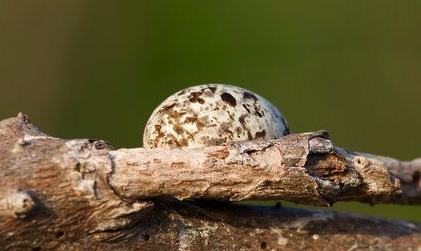
One of the oddest behaviors of small birds is the way that adult terns lay eggs.  They build no nest.  A single egg is carefully balanced on a ledge, or in the crook of a tree, out of the reach of ground predators.  When the egg hatches, the chick’s oversized feet help it grasp the branch and literally hang on for dear life. Both parents feed the chick. When the chick is two months old, it fledges, and the parents teach it to hunt for fish, and two weeks later the chick is on its own, flying and fishing for itself and maturing to start its own family. 


Fairy or not, these magical birds have added to my spell of enchantment here in Tonga.   They have made me appreciate the wonders of creation, and helped me value more the tenacity of life on this little fishhook island.  And my wishing stars are now closer, and feathered.  

Monday, May 7, 2012

The Mighty Coconut


One  evening a couple of weeks ago, a humble family taught me a lesson.  Because of their willingess to teach about ten Palangi missionaries, I will never look at the coconut in the same way.

Before coming to Tonga, when someone mentioned the word “coconut”, my mind quickly connected to German chocolate cake and Mounds and Almond Joy candy bars.  Fine.  But there’s a lot more, as Fipi and her family taught us.


In this picture, one of the other senior missionaries stands beside Fipi as she explains to us.  Like most native cultures, Tongans find a use for every part of the coconut.  She took some of the dry fibers that cover the shell of a coconut, and showed us one tiny part of the process used to make coconut fibers into ropes.  This is what Tongans used to use to make their fishing nets, to make their ropes to tie up plants and animals.  Rope from coconut fiber – the first revelation of the night!

Coconuts will float on water almost indefinitely.  Scientists think that is one way that most of the islands of the South Pacific have coconut palms.  A coconut can ride the ocean current from Tonga to Hawaii and still be able to sprout, thrust roots down into the sand and begin to grow towards the sky.  Pretty impressive


Next, we got to try to crack open coconuts.  One of the younger missionaries who came with us (still wearing his Tongan “ta’ovala” and “tupeno” – the traditional mat and men’s wraparound skirt) is shown here using what has become standard equipment in modern Tonga – a welded piece of equipment that basically uses a tire rim and an angled steel tube.  You’re supposed to just push the coconut down the tube, and it will pop the coconut open.  This is one of three ways to open a coconut.  You can also use the time-honored hammer approach, or if the coconut is still green and all you want is the milk, you just nail a hammer into one of the “eyes” of a coconut, and stick in a straw.  Poof, drink and cup all in one.


Once the older, non-milky coconut is cracked open, it’s time to shave the white meat out.  In this picture you can see one of our sister missionaries sitting on a narrow bench, straddling a large bowl.  But what you can’t see is that she holds the coconut over a wide serrated blade that is welded to the frame of the bench.  As she pulls the coconut back and forth over the blade, the meat is shaved off and falls into the bowl.  Even Fipi’s kids could do this very easily – the rest of us worked up a sweat in no time!


Did you know that if a coconut is allowed to sprout, it changes the quality of the meat inside?  I remember learning about how beans grow, that the “meat” of the bean is actually food for the sprout as it grows.  Well, a coconut is a giant version of that bean.  Some families allow their coconuts to sprout, and then crack them open, for a spongy, crumbly coconut meat that has a totally different taste. The Tongans call it “coconut brain” – I like the taste, but the name sounds like a middle schooler’s nightmare!


Well, after trying the green coconut milk, and the coconut brain, it was time to actually eat some solid coconut meat.  Fipi took out a knife (one that Crocodile Dundee would have been proud of) and sliced the meat while still inside the shell, and then simply popped the meat out of the shell to serve us several pieces. Delicious.  But I stayed clear of the knife, even though Fipi’s eight-year old son later performed some of his own coconut tricks with a bush knife (Tongan for machete!). 

Oh, and the coconut husk?  Either it’s used for fuel for fires at the frequent family outdoor feasts, or it is turned into souvenirs for tourists.  I haven’t seen a coconut bra in Tonga – people here are far too modest for that, most people swim in street clothing – but my husband and I have our own coconut souvenirs – holders for large name cards from a workshop we attended in March.


Okay, okay, since the story involves a coconut, I have to tell the first story every Palangi missionary hears in Tonga.  First frame of the comic strip:  a missionary comes to visit a very isolated home.  Second frame: as he walks into the home, he doesn’t duck down far enough to get through the door, and he bumped his forehead.  “Too low,” says the missionary quietly.  The family is impressed, because in Tongan, “tulo” is a very polite way to say “pardon me.”  Third frame: the missionary visits for a while, and then the family offers to get him a green coconut to drink.  Fourth frame: the missionary accompanies the father outside, and the father promptly climbs up the very mature coconut tree.  The missionary watches, and it’s his turn to be impressed.  The father keeps climbing, nearly a hundred feet in the air.  “Oh, too high,” calls out the missionary.  BONK.  Final frame:  the missionary is flat on the ground, having been hit in the head with a coconut, because “tu-ai” is Tongan for “idiot.”  Haha.  So next time you’re under a coconut tree, watch your commentary very carefully!

Wednesday, April 25, 2012

MAKING TAPA


Along with some of the senior missionary sisters, I  had a very special experience recently.  We got to take part in the making of tapa, a traditional ceremonial cloth.  The longer I stay here, the more amazed I am at what becomes a resource on this tiny island.

Tapa is the main tourist-oriented product here, and there are many tapa artists who create their own versions of traditional designs.  The designs can be representations of animals, or just geometric patterns. But the cloth and the ink both come from plants.  Tongi (TOHNG-ee) is an accomplished tapa artist who agreed to spend a few hours with some Palangi missionaries, and her daughter Lia (LEE-ah) was a wonderful help as well. 

The first step is to strip the bark off a particular kind of plant.  While we watched, Tongi, a woman of about 60, took a large “bush knife” (similar to a machete) and chopped down a paper mulberry sapling.  After stripping the branches, she slit the bark open along the bottom of the 5-foot long stick (which was probably no more than 4 inches around), and peeled the bark off the stick.  She set the stick aside, and sat down on the ground with the bark. (Sorry, I was too fascinated to take a picture!)

She laid the bark across a narrow, flattened log.  This log was about 5 feet long, with stabilizers underneath each end to hold it up off the ground. She took a squared, wooden hammer, and began pounding the bark, flattening and widening the bark.  The hammer reminded me of the meat hammer I have in my American kitchen, only this one had four different surfaces, rather than the two I’ve used to pound cuts of chicken or beef. 

One of Tongi's large tapa cloths - about 12 feet by 20.  
She hammered away on the bark for a little while, and then passed the hammer around to the rest of us.  Each of us pounded for  about 10 minutes under her expert supervision,  and what had been a 5-foot long strip of bark four inches or less wide was now about 8 feet long and almost a foot across.  Want it wider?  Pound  out another one, then patch them together!  Want it longer? Patch more together.  Some of these tapa can reach  half a mile long, when all the women in the village decide to put one together. 

Tapa drying 

 Of course, now the tapa is supposed to dry out for a few days.  So we set aside the new piece, and we were each handed a small sheet of tapa, dried, cut and ready for painting.  


But now to choose a design. Hmmm… What to do, what to do? And how do we paint it anyway?

Oh, we’ll need some ink.  Ink?  Like real ink?  Wait, from  primitive, pre-tech times?  Yup.  Back to the plants.  A different plant, called a koka tree here in Tonga, is the source of the ink.  You collect the sap from the branches, then you (a) use it fresh, (b) heat it somewhat, or (c) boil it vigorously for 15 minutes, depending on the color you want.  The fresh sap results in a reddish color (usually used for the dry rubbings), the heated sap gives a lovely golden-brown hue, and if you boil the sap, it comes out black.  All from the same plant.  Pretty impressive.


And to give us some ideas on traditional designs, Tongi brought out some of her wooden rubbing boards.  Those of you who are familiar with German and Dutch cookie boards might think twice when you look at these pictures.  These wooden boards are hand-cut designs that reminded me right away of the cookie presses I loved in Europe, but they’re just a tad larger (!), reaching about 18-22 inches in length and usually about a foot across.  (That would make one BIG cookie!)  I also thought about woodblock painting, but the process here in Tonga is a little different from that, too.  Instead of inking the woodblock and printing on the paper, you take the tapa, lay it on top of the board, then make a rubbing with some dry ink.  The dry rubbing is only a preliminary guide for your painting, but it gives you a general idea of what you want to create.


So, we’ve done some of the rubbings, and Tongi gives us cups of the brown and black inks.  You use sharpened sticks to paint with, like the stick Lia is sharpening in this picture.  And whether you use a lot of ink or a little determines the intensity of your colors.  Go to it, girls.  Here’s where my pre-kindergarten skill in art shows up – that’s why you won’t see MY artwork in these pictures (plus I was nursing a very sore right wrist this weekend, so I was trying to do most of it with my left hand – ha!).  But the main thing was, we got to appreciate the effort that goes into making the tapa.


Most of us tried geometric patterns.

One sister, more artistic than the rest of us, did a sea turtle,
a cherished symbol of the South Pacific.


Our mission nurse works on a royal design.


  Tapa is used as a cover cloth, and in some traditional dancing, the women wear dresses made of tapa.  You can make any decoration you wish for art work, but for dresses and robes, only royalty can wear the above pattern. 


We all felt good about our first efforts at making tapa, but we were still in awe of Tongi’s designs.  She is one of the few tapa artists who uses a deep red ink, by painting with the fresh ink over and over again.  She is also one of the few who sprays a fixative on her finished product, so the ink will not rub off.  This gives her work a glossy coat, and everyone knows shiny is better!  The next time you see a tapa, just remember, even a small one represents a whole lot of love and effort.  

An Eagle Scout in Tonga


This happened a few weeks ago, but I haven’t had a chance to write it!  We had a wonderful visit from Taylor, a Boy Scout who made Tonga his Eagle Project.  His grandfather accompanied him, and we had a week together, showing off Tonga and marveling at the scope of the Eagle Project of this remarkable Scout.
Taylor and his grandfather Van, in the craft section of the city's indoor market.
But first let me tell you about Taylor’s grandfather, Van Johnson (yeah, like the actor – he didn’t have trouble getting restaurant reservations, back in the day!).   Van has had connections with Tonga for years.  He is one of two Palangi (pah-lang-ee) that I know of who have been given a Tongan name.  Several years back, he arranged for half a million dollars’ worth of medical supplies to be sent to Tonga.  He came here and spent a week, and at the end of the week was notified that a ceremony was to be held in his honor.  He went and enjoyed the dinner, but then was pulled into a circle of village chiefs and informed that henceforth, he would be known as “Shooting Star”, because his presence was short but his influence would be longlasting.  And it has.  


So when Taylor asked his grandfather for ideas about an eagle project, Van thought of the “outer islands” where even fewer medical supplies exist.  He and Taylor got together with some medical supply companies, and some charitable foundations, and gathered a quarter million dollars’ worth of supplies.  Taylor’s fellow Boy Scouts, and the Young Women (teenaged girls) of his ward/congregation spent a day packing all the supplies in a warehouse, and filled a Conex container to be shipped to Tonga.  


When the arrival date was close, Van and Taylor flew to Tonga.  They stayed here on the Liahona campus, and of course the senior missionaries found them.  We took them to the beach and went snorkeling with them.  We took them for a picnic lunch.  Then we started showing off the little island.


This one is actually on every tourist map of Tonga.  Every coconut palm I have ever seen has had a single “head”, but this one has two (and as we all know, two heads are better than one!) – so we made sure we all got pictures of it.  You can’t tell from this picture, but the tree actually has a third head, a small one.  So who knows what the future will bring?  In 20 years, this may be the “octopus coconut palm tree!”  


Then we took them to see the flying foxes,the ones I wrote about in my “Wild Kingdom” entry.  We watched them launch from their trees and return for about an hour, but we got a bonus.  We saw about a dozen ekiaki (eh-kee-ah-kee), white terns, known in Hawaii as fairy terns.  These are fishing birds that do not build nests.  They simply lay an egg in the crook of a tree branch, or even on the ground, and when the chick hatches, its overgrown feet enable it to grab hold of a branch and stay safe, even when it sleeps, for the first two months of its life, until it is ready to fly.  Because these birds have all-white feathers, they edges of their wings look translucent when they fly, and because they can hover, they have a reputation for being magical.  Whatever – they’re gorgeous.  
Can't take credit for this one - thank you Google images.  But you see what a wonderful fantasy-like creature the white tern is - no wonder people think they're magical!


Taylor and Van traveled all over the island on their own, too, and gave me a couple of pictures.  Not far from Liahona is a church farm, where cattle are raised.  Frequently, the bulls are tied up across the street from the cows, and the day that Taylor and Van drove the road, sure enough, here was a bull tied to a tree.  So Taylor, teenager that he is, had to get out of the car and tease the bull, removing his own red shirt and playing toreador.  Star Trek fans will fear for Taylor’s life, seeing him in a red shirt, but he survived.  


Taylor is the most open-minded American teenager I know.  He readily accepted the native custom of wearing a tupeno (too-peh-noh) and a ta’avalo (tah-ah-vah-loh).  Not only did he wear his scout shirt with the native skirt (far cooler in this heat than slacks) and mat, he didn’t let it slow him down when he decided to try to climb a coconut palm himself!


Well, on to the official ceremony.  Taylor and his grandfather brought gifts for the officials at the Ministry of Health, as they celebrated the arrival of the Conex shipping container.  They met with Ministers, hospital administrators, and Parliament members as they talked about the design of Taylor’s Eagle project, and how it would benefit the hospitals on the outer islands.  Most Tongans recognize the Mormon Church as Christian, but the little beautiful statues of Jesus Christ presented by Taylor(hard to see in this picture, but it's there)  will remind them of the Christian service that this young man provided to many, many Tongans.


After the meeting, a reporter from Tongan Television interviewed Taylor, who explained his project and acquitted himself well on the news that night, teaching the Boy Scout Law and Oath, and explaining his personal beliefs.  In this culture of “respect your elders,” it was wonderful to see a young man gain the respect of so many of his elders, including me!